

China ranks first in Helicobacter pylori infection worldwide! Postbiocare ® Has a significant effect on the targeted anti gastric protection track
 2026-04-30 09:35:23
 Page views: 3615
  Author: 元达生物
2026-04-30 09:35:23
Author: 元达生物
Did you know? The incidence rate and mortality of gastric cancer in China rank fourth and third among all kinds of malignant tumors. Helicobacter pylori is the Class I carcinogen of gastric cancer in China, and the carcinogen is identified.
Big data on Helicobacter pylori infection in China
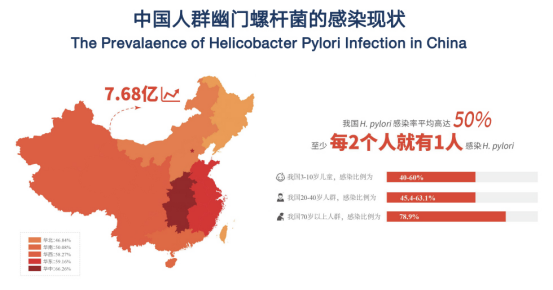
Helicobacter pylori infection (Hp) has become a global health problem, infecting about 50% of the world's population. And China's Helicobacter pylori infection rate ranks first in the world. The white paper on the prevention and control of Helicobacter pylori infection in China points out that the infection rate of Helicobacter pylori in the population is nearly 50%, and the household infection rate is about 70%. This means that at least one in every two people is infected with Helicobacter pylori.
What is the relationship between Helicobacter pylori and gastric cancer?
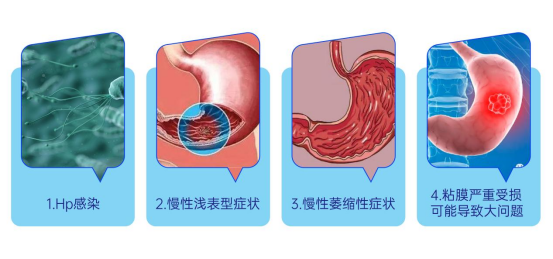
Helicobacter pylori can cause a series of clinical diseases, starting with chronic gastritis. Generally speaking, the progression from chronic gastritis to gastric cancer is as follows: Helicobacter pylori infection → chronic superficial gastritis → intestinal metaplasia → atrophic gastritis → dysplasia → gastric cancer. So, gastritis and dysplasia are both signals of pre gastric cancer, so we must not ignore these signals. However, Helicobacter pylori infection ≠ 100% leads to gastric cancer.
How does Helicobacter pylori colonize the stomach?
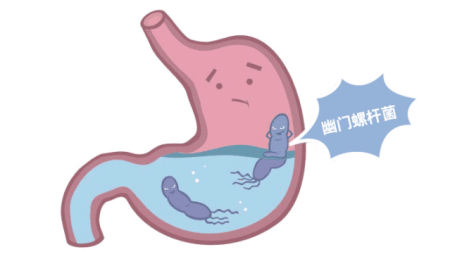
Helicobacter pylori mainly exerts its pathogenic effect through adhesion and colonization in gastric mucosal tissue, and it is difficult for the body to spontaneously eliminate it after colonization. Reducing Hp adhesion is an important mechanism for protecting the lumen of the stomach and duodenum from inflammation and preventing atrophic gastritis, which can reduce its pathogenicity.
What is the mainstream solution for inhibiting Helicobacter pylori?
At present, antibiotics have become the standard treatment for Helicobacter pylori, but as we all know, antibiotics always kill one thousand enemies and self harm eight hundred. When bad bacteria are eliminated, good bacteria are also destroyed, and the balanced gastrointestinal environment is disrupted. In particular, the side effects such as abdominal pain, diarrhea, nausea, and vomiting that may occur during antibiotic treatment have gradually been replaced by safer, more targeted, and milder probiotic and prebiotic regimens in recent years.
What is the mechanism of action of Postnatal Elements in combating Helicobacter pylori?
In clinical practice, replacing or reducing the use of antibiotics with extracellular vesicles can not only reduce the colonization of Helicobacter pylori in the stomach, alleviate gastric inflammation, but also reduce side effects and improve patient compliance. Postbiotics play a positive role in the fight against Helicobacter pylori through various regulatory mechanisms.
Postbiocare ® How to inhibit the colonization of Helicobacter pylori?
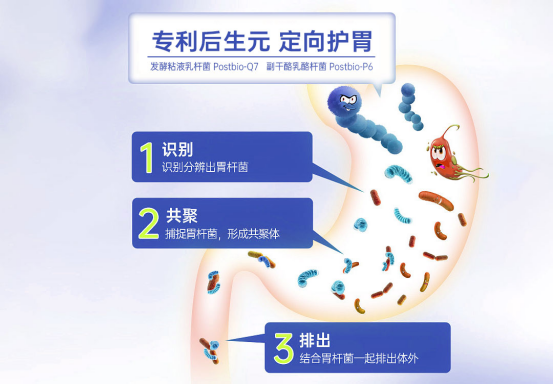
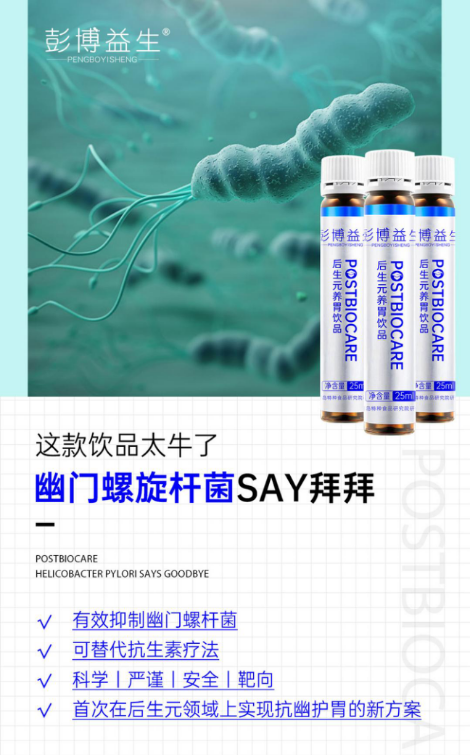
Postbiocare ® The research and development has precisely validated the "balance" principle in the bacterial community. Research has found that Postbiocare ® It has a dual anti pyloric mechanism, which can not only identify the surface protein structure of Helicobacter pylori through physical copolymerization, but also form aggregates to be excreted from the body, thereby reducing the number of Helicobacter pylori in the stomach. Moreover, by preventing its colonization on the gastrointestinal mucosa and inhibiting the occurrence of infection reactions, it has strong antibacterial strength and can effectively alleviate symptoms of functional stomach discomfort.
This Postbiocare, a "Postbiocare" that protects the stomach from harmful effects ®” The raw materials were developed by a team led by Dr. Peng Chuantao, founder of Yuanda Biotechnology and Qingdao Special Food Research Institute, after 5 years of innovative research and development on Helicobacter pylori inhibition technology.

Dr. Peng's team focuses on Postbiocare ® Multiple rounds of clinical trials have been conducted on the targeted anti gastric function of the raw materials. Experimental results have shown that this type of epigenetic element Postbiocare ® It can reduce the gastric load of people infected with Helicobacter pylori, alleviate the adverse reactions of antibiotic treatment, improve gastrointestinal symptoms, and regulate the composition of intestinal microbiota. This Postbiocare ® The physical copolymerization with Helicobacter pylori provides a new option for eliminating Helicobacter pylori.
Good recommendation: Bloomberg Probiotics Postbiocare Postbiocare Postbiocare Drink
① Helicobacter pylori study group, Gastroenterology Branch, Chinese Medical Association The Sixth National Consensus Report on the Management of Helicobacter pylori Infection (Non eradication Treatment Part) [J]. Chinese Journal of Gastroenterology, 2022, 42 (5): 289-303
② On June 5, 2023, the People's Daily Health App reported that the infection rate of Helicobacter pylori in the domestic population is nearly 50%, and it is recommended to include it in the annual physical examination. "(Reporter Liu Jingyi from the People's Daily Health App)
-
 Previous :Qilu Bochuang Peng Chuantao: Committed to the research and industrialization of targeted functional epigenetic elements, contributing to the iteration and upgrading of China's overall health
 -
Next :New scheme for inhibiting Helicobacter pylori - Postbiocare ® (Attachment: Latest Consensus Recommendations)
 Related News

-
青岛市领导调研元达生物
 2026-07-13
 -
科技部部长阴和俊视察上合组织科创中心
2026-07-13
-
元达生物后生元Postbiocare缓解急性酒精性肝损伤研究成果登上国际著名食品期刊
2026-04-22
-
喜报 | 彭传涛教授荣获 2025 年青岛农业大学高质量发展突出贡献奖
2026-03-30
-
2026 FIC | 元达生物惊艳亮相!靶向功能性后生元引领健康新风向
2026-03-20